Bring the product matrix across without flattening it.
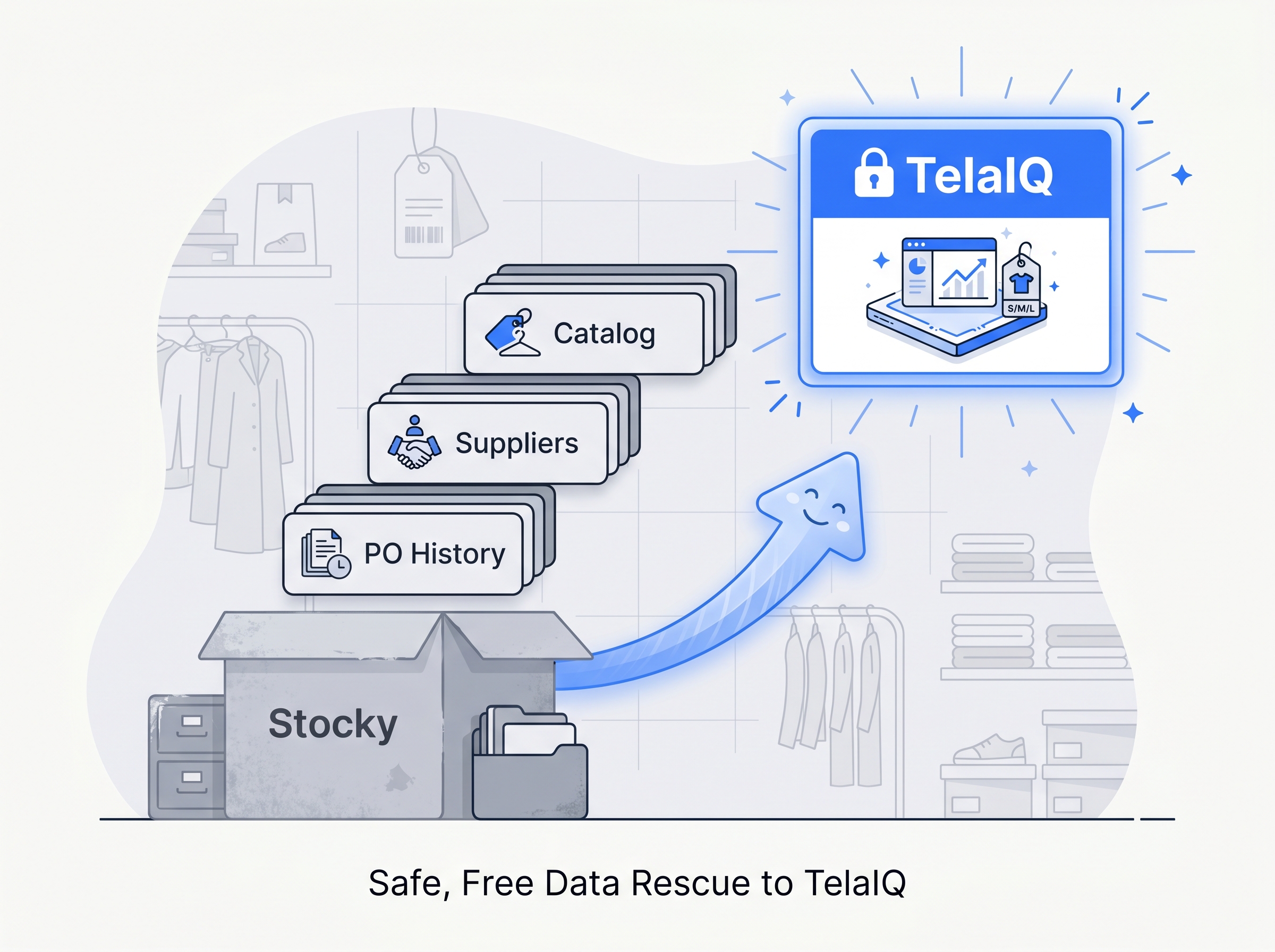
TelaIQ can preview tested product-export column shapes from Shopify, Lightspeed, and Square, along with a generic CSV format. Catalog mapping, historical records, validation, and cutover are reviewed as separate parts of the migration plan.
Preview the catalog before commit
Paste a supported export, inspect the dry-run summary, and validate the mapping before writing catalog records.
Flat variant rows are grouped into TelaIQ's style × color × size structure using source identifiers.
Supported barcode and price fields map to individual SKUs for review before operational use.
On-hand columns can be reviewed and reconciled, but the self-service importer will not post inventory. Stock changes require a governed receiving, count, or transfer workflow.
Natural keys avoid duplicate SKU rows. Existing product attributes and prices are not overwritten automatically; every repeat import still requires preview and reconciliation.
Historical data is scoped separately
Source quality and export access determine what can be migrated beyond the catalog. The onboarding plan records the agreed fields, checks, and cutover responsibilities.
Vendor records, lead times, contacts, and product mappings are assessed from available exports.
Open commitments and historical documents require source-specific mapping and balance checks.
Usable transaction history can be evaluated for reporting and demand inputs, with totals reconciled before acceptance.
How the migration works
Start with sample catalog data and any historical files required for the proposed scope.
Review variant grouping, identifiers, prices, and stock totals in a non-production environment.
Document final exports, validation owners, timing, rollback, and acceptance checks before launch.
Plan the cutover around the source data.
A representative source export is the starting point for every migration estimate.
Start with the catalog.
Book a 20-minute call to review source files, required history, and the current product fit.